


How to Cut Metal Roofing Safely and Accurately?
If you’re planning a metal roof installation or repair, knowing how to cut metal roofing safely and accurately is a must. Metal panels are incredibly durable, but cutting them incorrectly can lead to jagged edges, wasted material, and even personal injury. Whether you’re a DIY-minded homeowner or just curious about the process, understanding the proper tools and techniques ensures better results and fewer risks. For those in Moorhead and surrounding areas, where metal roofing is popular for its weather resistance, this knowledge can be especially valuable.
- Cleaner cuts: The right methods reduce burrs and distortion.
- Improved safety: Proper tools and prep help prevent injuries.
- Fewer mistakes: Planning cuts in advance reduces waste and saves time.
Let’s take a closer look at the tools you’ll need, the steps to follow, and the safety practices that make all the difference.
Why Cutting Metal Roofing Requires Special Care
Unlike shingles or wood, metal roofing panels require precision and planning. Their strength and rigidity make them durable on your home—but trickier to trim without the right technique.
Improper cutting can lead to uneven panels, sharp edges, and coating damage that may lead to rust or leaks down the line.
Common Applications
You may need to cut metal roofing panels when:
- Adjusting panel lengths
- Fitting around chimneys or vents
- Installing ridge caps, flashing, or valleys
- Customizing angles for complex roof shapes
Even professional installers in Moorhead and surrounding areas often adjust panels on-site to match roof geometry.
Tools for Cutting Metal Roofing
There are several tools that can be used to cut metal roofing, and each serves a specific purpose. The best tool depends on the type of metal, the cut needed, and your comfort with power equipment.
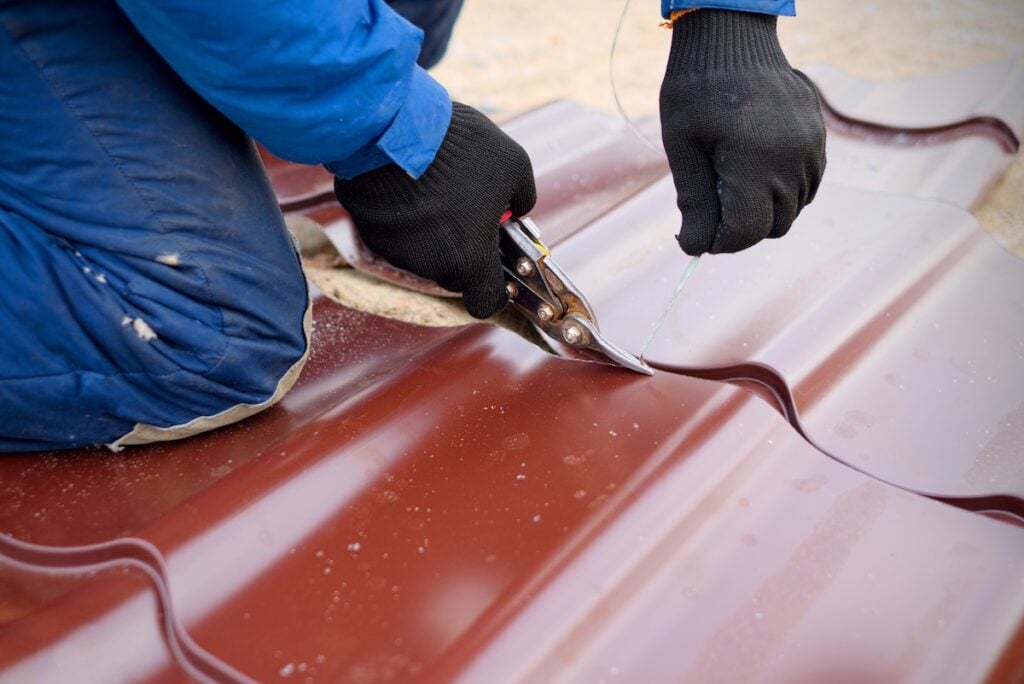
Manual Snips
Ideal for small cuts and detailed trimming.
- Aviation snips: Come in left, right, and straight-cut varieties. Best for thinner metal and curves.
- Tin snips: Similar to scissors, good for short, straight cuts.
Pros: Affordable, no electricity needed
Cons: Not ideal for long cuts or thick panels
Electric Shears
Electric or cordless shears cut cleanly through most types of metal roofing.
- Cuts with minimal distortion or sparks
- Available in single or double-cut models
Pros: Faster and easier than snips
Cons: Less precision on very tight corners
Nibblers
Nibblers use a punching action to cut through metal in a clean, controlled way.
- Great for curves, notches, and complex shapes
- Less likely to warp the panel’s edge coating
Pros: Precise and clean edges
Cons: Can leave small metal shavings
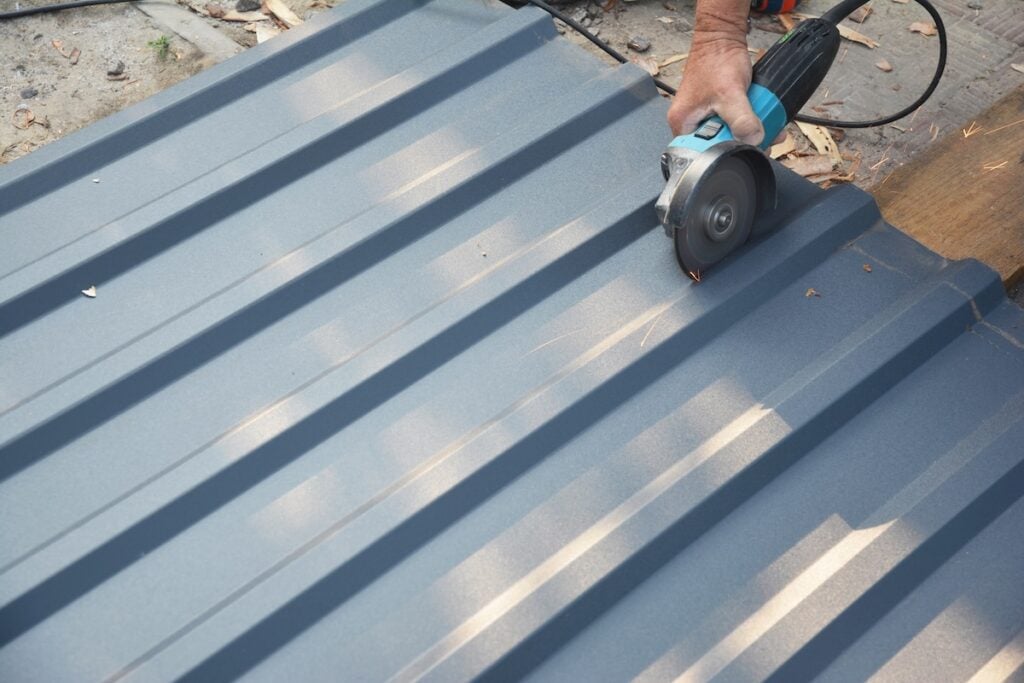
Circular Saw (With Specialty Blade)
Circular saws can be used with a fine-toothed or carbide-tipped blade designed for metal.
- Best for long, straight cuts on thick panels
- Must use extreme caution—sharp and loud
Pros: Efficient for full-panel cuts
Cons: Produces sparks, heat, and noise—always wear protective gear
Safety Tips for Cutting Metal Roofing
Metal roofing panels are sharp, heavy, and often awkward to maneuver—especially on-site. Prioritizing safety is key.
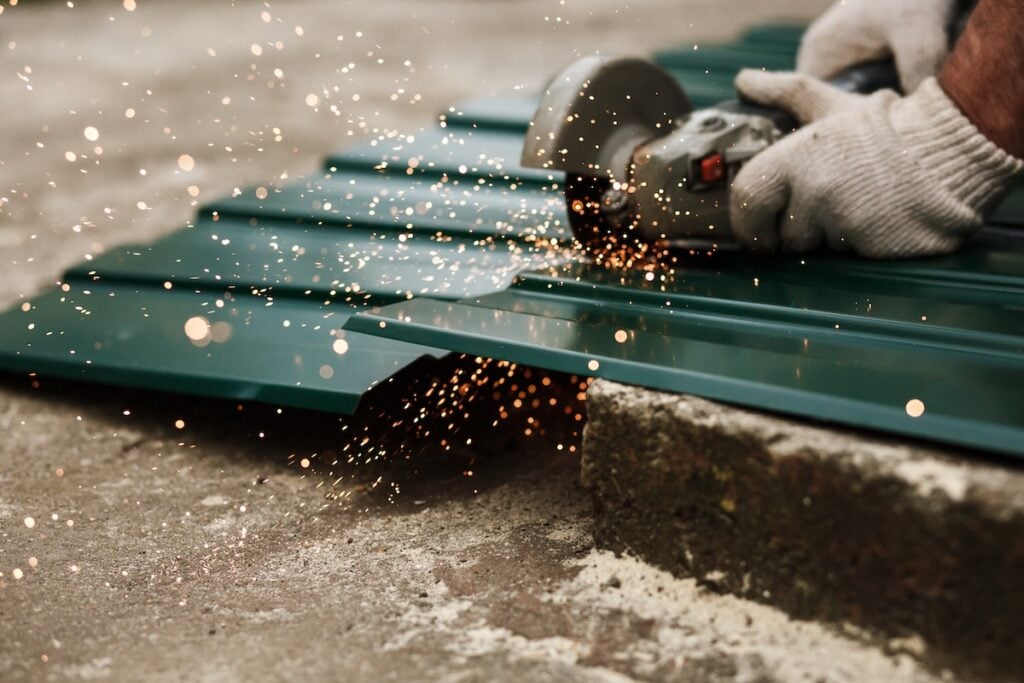
Wear the Right Protective Gear
- Gloves: Heavy-duty gloves protect from sharp edges and shavings.
- Safety glasses or face shield: Prevents injury from flying debris.
- Long sleeves and pants: Reduce risk of cuts or burns from sparks.
- Ear protection: Important when using power saws or nibblers.
Secure Your Work Area
- Use sawhorses or a stable cutting table
- Clamp panels down to avoid movement
- Keep others (especially children and pets) away from the work zone
Handle Metal Panels Carefully
Panels can be long and flexible. When moving them, avoid bending or dragging, which can damage coatings or result in injury.
5 Steps to Cut Metal Roofing
With your tools and safety gear ready, follow this process for accurate, clean cuts every time.
1. Measure and Mark Your Cuts
Use a tape measure to determine the exact length or angle needed. Mark the panel with a chalk line or permanent marker. Double-check your measurement before cutting—mistakes can be costly.
2. Choose the Right Tool for the Cut
- Snips: Best for notching or trimming around openings
- Shears or nibblers: Ideal for precision cuts or curves
- Circular saw: Use for long straight cuts only if safe and necessary
Match the tool to the cut for best results and safety.
3. Support the Panel While Cutting
Use sawhorses, a cutting table, or soft supports to elevate the panel and prevent flexing. Secure it with clamps if needed.
4. Cut Smoothly and Steadily
Avoid forcing the tool. Let the blade or cutting head do the work. Keep your hands clear of the cut line and watch for sharp edges forming as you go.
5. Deburr and Inspect the Cut Edge
Use a metal file or deburring tool to smooth out any rough edges. This step reduces the risk of injury and protects underlayment materials during installation.
Mistakes to Avoid When Cutting Metal Roofing
Cutting metal is straightforward with practice, but these common mistakes can lead to poor results or safety hazards.
- Using the wrong blade or tool: Wood blades can destroy the metal and cause injury. Always use metal-rated tools.
- Skipping safety gear: Flying metal chips and sparks are serious risks.
- Cutting too quickly: Rushing can lead to jagged edges, wasted panels, or damage to protective coatings.
- Cutting on a soft surface: This can flex the panel and lead to uneven cuts.
Protecting the Panel’s Finish
Most metal roofing is coated with a protective finish that resists corrosion and UV damage. Cutting through this coating exposes bare metal that can rust if left untreated.
How to Prevent Coating Damage
- Use tools that reduce friction and heat
- File down sharp edges after cutting
- Apply touch-up paint or sealant to exposed edges
This small step protects your investment and extends the life of your roof—especially important in climates like Moorhead and surrounding areas that see snow, ice, and sun.
When to Call a Professional
While minor cuts or trim work may be manageable for experienced DIYers, larger installations are often best left to the pros.
Professional roofers have the tools, experience, and safety training to cut and install metal roofing efficiently and safely. They also ensure proper fit, slope, and ventilation—critical for long-term performance.
If you’re planning a full metal roof installation or dealing with steep slopes, curved structures, or custom flashing work, bringing in a qualified contractor is worth the peace of mind.
Beyond ensuring a perfect installation, professionals are also best equipped to identify underlying issues that could lead to bigger problems down the road. Even the most durable systems can develop small leaks or loose fasteners over time, and scheduling a professional metal roof repair at the first sign of trouble will protect your warranty and keep your home watertight for decades.
Metal Roofing and Local Weather Conditions
In areas like Moorhead and surrounding regions, metal roofing is a smart long-term investment. It resists heavy snow, strong winds, and hail damage better than many other materials. Knowing how to cut and install it correctly ensures it performs well for decades.
Proper cutting techniques not only improve safety—they also reduce waste, prevent leaks, and preserve the roof’s appearance and structural integrity. When these technical details are handled with precision by a professional, it directly impacts the overall lifespan of the system, leading many homeowners to discover just how long does a metal roof last when it is built to withstand the North Dakota and Minnesota climate.
Trust 5 Star Roofing and Contracting for Metal Roof Expertise
Now that you understand how to cut metal roofing safely and accurately, you can appreciate the care and craftsmanship that goes into every successful metal roof installation. Whether you’re trimming panels for a small repair or planning a full replacement, proper tools and safety practices are key to great results.
At 5 Star Roofing and Contracting, we help homeowners in Valley City and surrounding areas get the most out of their metal roofs. Our expert team handles everything from custom cutting to precise installation with attention to detail and a focus on long-term durability.
Contact 5 Star Roofing and Contracting today for a free inspection and let us deliver expert metal roofing solutions tailored to your home.


