


Storm Damage to Roofs: 5 Signs You Shouldn’t Ignore
Storm damage is one of the most common reasons homeowners end up needing roof repairs, and the signs are often easier to miss than you’d think. High winds, hail, heavy rain, and falling debris can leave your roof compromised even when it looks completely fine from the ground. Knowing the warning signs helps you catch damage early, protect your home from leaks, and file an insurance claim while the damage is still fresh.
- Why it matters: Storm damage that goes unnoticed leads to leaks, mold, and expensive repairs down the road.
- What to watch for: Missing shingles, dented gutters, granule loss, water stains, and lifted flashing are the top warning signs.
- What to do: Take photos, call a licensed contractor, and file your insurance claim quickly.
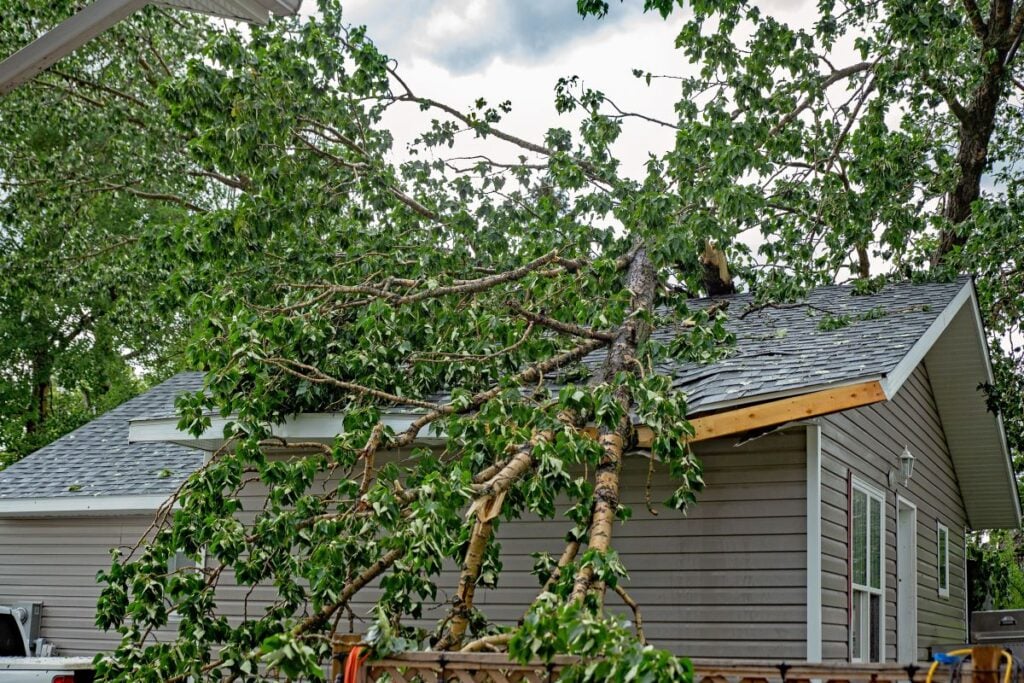
Why Does Storm Damage to Roofs Matter?
Storm damage matters because it can turn a healthy roof into a leaking one overnight, and the damage often hides in places homeowners don’t check. Even one strong storm can loosen shingles, break sealant, or crack flashing in ways that let water in for months before you spot the problem.
How Common Is Storm Damage in the United States?
Storm damage is one of the most common weather-related problems for American homes. Every year, thousands of homes across the country get hit with wind, hail, heavy rain, or debris that damages the roof. Severe storms are especially common in the Midwest and Southeast, but they can happen just about anywhere. Because roof storm damage is so widespread, most homeowners will deal with it at some point in the life of their roof.
According to Climate Central’s analysis of NOAA data, severe storms including thunderstorms, tornadoes, damaging winds, and large hail were the most frequent type of billion-dollar weather disaster in the United States from 1980 through 2024, with 203 separate severe storm events accounting for half of all major weather disasters over those 45 years.
- Very frequent: Severe storms are the most common type of major weather disaster.
- Big regions affected: The Midwest, Southeast, and Great Plains see the most damage.
- Multiple threats: Wind, hail, rain, and debris can all cause roof damage.
- Any time of year: Storm damage isn’t just a spring or summer problem.
What Types of Storms Cause Roof Damage?
Almost any strong storm can damage a roof, but a few types cause more problems than others. Thunderstorms with high winds can lift or tear off shingles. Hail storms crack shingles and knock off granules. Heavy rain overwhelms gutters and finds every weak point in the roof. Winter storms cause ice dams that push water up under the shingles. Falling branches and debris from strong winds can puncture the roof entirely.
- Thunderstorms: High winds and driving rain damage shingles and flashing.
- Hail storms: Impact damage that cracks shingles and knocks off granules.
- Winter storms: Ice dams and heavy snow loads stress the roof.
- Wind events: Falling branches and debris cause direct damage.
5 Signs of Storm Damage to Your Roof You Shouldn’t Ignore
These are the five most important signs of roof storm damage to watch for after any major weather event. Even one of these signs is worth a closer look from a professional roofing contractor.
1. Missing, Lifted, or Curled Shingles
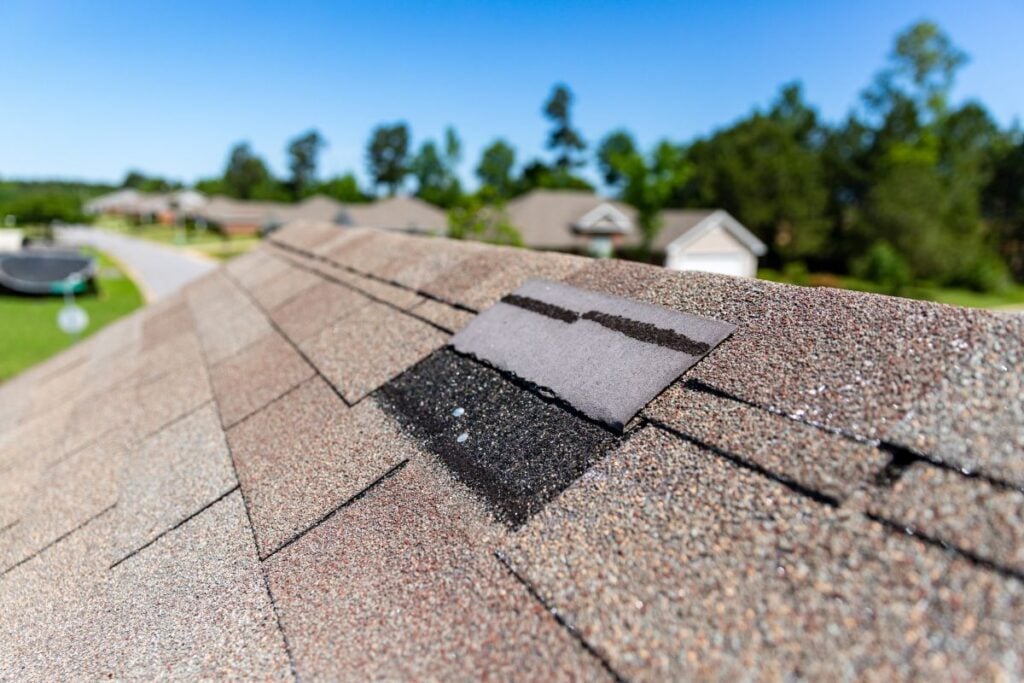
Missing shingles are the most obvious sign of storm damage, and they’re a clear signal that water can get to the underlayment underneath. High winds can rip shingles off entirely, or they can loosen and lift edges without tearing them off completely. Lifted or curled shingles are just as concerning because they let water in from the sides even when they still look attached from the ground. After any windy storm, take a walk around your home and look up at the roof from every angle to see if anything looks out of place.
- Missing shingles: Bare patches on the roof mean immediate leak risk.
- Lifted edges: Shingles that don’t lay flat can let water underneath.
- Curled shingles: Corners curling up mean the seal has broken.
- Random pattern: Wind damage usually shows up randomly across the roof.
2. Dents on Gutters, Downspouts, or Metal Flashing
Dents on any metal parts of your roof or gutter system are a strong sign that hail or debris hit the roof itself. Metal parts like vents, flashing, and gutters show damage faster than shingles because they’re harder surfaces. If you can see clear dents in your gutters or downspouts after a storm, the shingles above almost certainly took the same hits. Even if the shingles look fine from the ground, the impact likely bruised them or knocked off protective granules.
- Dented gutters: Round dents from hail impact.
- Bent downspouts: Dented or crushed downspouts from hail or debris.
- Damaged flashing: Dents or shifts in the metal around chimneys and vents.
- Damaged vents: Roof vents show hail dents very clearly.
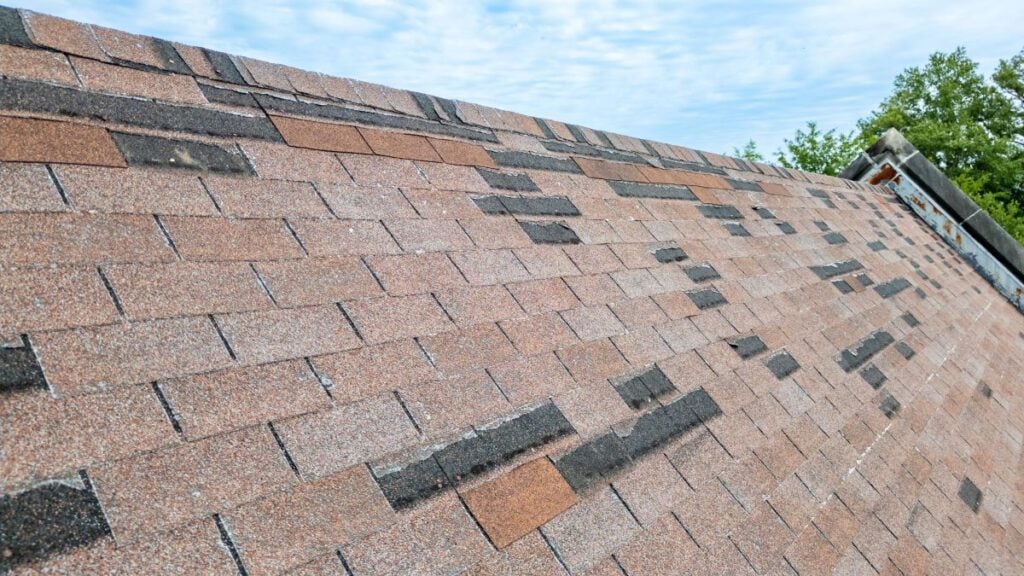
3. Granules in Gutters or on the Ground
A pile of shingle granules in your gutters or on the ground below your downspouts after a storm is a sure sign that your shingles took a beating. Granules look like fine, dark sand, and they’re the protective layer that keeps shingles from breaking down under the sun. Some granule loss is normal over the years, but a sudden buildup after a storm means the storm damaged the shingles enough to strip granules off. Once granules are gone, the shingles wear out much faster.
- Look in gutters: Piles of dark, sandy material after a storm.
- Check splash blocks: Granule buildup near the base of downspouts.
- Ground level: Granules on the sidewalk or driveway are a warning sign.
- Age factor: Older shingles lose granules more easily than newer ones.
4. Water Stains, Damp Spots, or Musty Smells Inside
Signs of damage inside your home often show up after a storm has passed, sometimes days or weeks later. Water stains on ceilings, damp spots on top-floor walls, or a musty smell in the attic or upper rooms all point to a leak somewhere above. By the time you see interior damage, water has been coming through the roof long enough to soak through the insulation and reach the drywall. This is one of the biggest signs to act on quickly, since mold can start growing within 24 to 48 hours of moisture exposure.
- Ceiling stains: Yellow, brown, or rusty spots on top-floor ceilings.
- Damp walls: Wet spots on upper walls near the ceiling.
- Attic moisture: Damp insulation or condensation on the underside of the roof.
- Musty smell: Damp odors that weren’t there before the storm.
5. Damaged, Bent, or Lifted Flashing
Flashing is the metal that seals around your chimney, skylights, vents, and any other spot where something sticks up through the roof. It’s one of the most common places for storm damage to show up, and it’s one of the biggest sources of leaks when it fails. Strong winds can bend flashing, hail can dent it, and heavy debris can pull it loose. If you can see lifted, bent, or damaged flashing from the ground, water is almost certainly getting past that point when it rains.
- Bent flashing: Metal that’s been pushed out of shape by wind or debris.
- Lifted edges: Flashing pulling away from the roof surface.
- Dented flashing: Round dents from hail impact.
- Rust or corrosion: Older flashing that’s been exposed can rust after storms.
What Should You Do When You Spot Storm Damage?
If you spot any of these signs, quick action matters. Storm damage almost always gets worse over time, and moving fast protects your home, your budget, and your insurance claim.
How Do You Document Storm Damage?
Documenting the damage starts from the ground with clear, date-stamped photos of every visible sign. Take pictures of missing shingles, dented gutters, granule piles, interior water spots, and any storm debris on the roof. Don’t climb on the roof yourself, because a storm-damaged roof is often slippery and dangerous. Save any news reports or weather alerts from the storm so you have proof of when the damage happened. A professional inspection with a written report is the strongest form of documentation for insurance.
- Take photos: Date-stamped pictures of everything visible from the ground.
- Save weather records: Storm reports, alerts, or news coverage.
- Skip the ladder: Don’t climb on a wet or damaged roof.
- Get a pro report: Written inspection reports strengthen any insurance claim.
How Do You File a Storm Damage Insurance Claim?
Filing a storm damage claim starts with contacting your insurance company as soon as possible after the damage happens. Most homeowners policies cover sudden damage from storms, but coverage rules vary and you usually have a limited window to file, often one to two years. Have your photos, weather records, and inspection report ready when you call. A good roofing contractor can meet with the insurance adjuster to walk the roof together and make sure no damage gets missed. If you have significant damage, keep receipts for any temporary repairs like tarping the roof.
- Call quickly: Report the damage as soon as it’s safe.
- Have documents ready: Photos, weather data, and contractor report.
- Meet with the adjuster: Have your contractor there for the inspection.
- Save receipts: Keep records of any temporary repairs you paid for.
When Do You Need Emergency Repairs?
Some storm damage can’t wait for a regular appointment. Missing shingles during rainy weather, broken skylights, or visible holes in the roof usually need emergency tarping or temporary repairs to prevent more damage. Interior leaks that are actively dripping call for immediate attention too. A licensed contractor with 24/7 emergency service can get out to your home quickly, tarp the damaged area, and stop the leak until permanent repairs can be scheduled. Emergency repair costs are usually covered by your insurance as long as you document the work.
- Active leaks: Water actively dripping inside calls for immediate action.
- Missing shingles: Bare patches during wet weather need tarping right away.
- Damaged skylights: Broken glass or missing pieces need same-day coverage.
- Holes or punctures: Any visible openings need emergency temporary repair.
Frequently Asked Questions
How Long Do I Have to File a Storm Damage Claim?
Most homeowners insurance policies require storm damage claims to be filed within one to two years of the storm, though the exact deadline varies by state and by policy. The sooner you file, the easier it is to tie the damage to a specific storm. Check your policy or call your insurance company for the deadline that applies to you.
Will My Insurance Cover Storm Damage to My Roof?
Most homeowners policies cover sudden storm damage from wind, hail, and falling debris, though coverage depends on your specific policy and location. Some policies have separate deductibles for wind and hail damage, especially in storm-prone areas. Slow leaks or damage from poor maintenance usually aren’t covered.
Can I Repair Storm Damage Myself?
Basic tasks like clearing debris from gutters or taking ground-level photos are safe DIY jobs. Anything involving climbing on the roof, replacing shingles, or fixing flashing is best left to a professional. Storm-damaged roofs are often slippery and unstable, and falls are one of the leading causes of home injury.
How Much Does Storm Damage Repair Cost?
Small storm damage repairs typically run $400 to $2,000 for things like replacing a few shingles or resealing flashing. Larger repairs that involve multiple sections of shingles, damaged decking, or extensive flashing work can cost $3,000 to $10,000 or more. If insurance approves a full replacement, your out-of-pocket cost is usually just your deductible.
What Should I Do Immediately After a Storm?
Stay inside until the weather clears, then walk around your home to look for damage from the ground. Take photos of anything unusual, check for interior leaks, and call a licensed roofing contractor for an inspection if you see any warning signs. Avoid climbing on the roof, and get to any active leaks with buckets or tarps to limit damage until repairs happen.
Do I Need an Inspection If I Don’t See Damage?
Even if your roof looks fine from the ground, hidden damage from hail, wind, or debris can be there. If your area had a major storm with hail one inch or larger or winds over 60 mph, a free professional inspection is a smart move. Many contractors offer free post-storm inspections that catch damage before it becomes a bigger issue.
Why 5 Star Roofing and Contracting Is the Right Choice for Storm Damage Repairs
When a storm hits, the contractor you call makes a real difference in how quickly your roof gets back to protecting your home. 5 Star Roofing and Contracting brings the experience, care, and quick response homeowners need after any storm, including IKO ShieldPRO Certified Contractor status, HomeAdvisor Top Rated recognition, full licensing, and 24/7 emergency repair availability for damage that can’t wait. Our team documents everything with photos, meets with insurance adjusters, and walks you through the whole repair process in plain language. Reach out to 5 Star Roofing and Contracting today for a free, no-pressure storm damage inspection and honest guidance on the right next step for your roof.