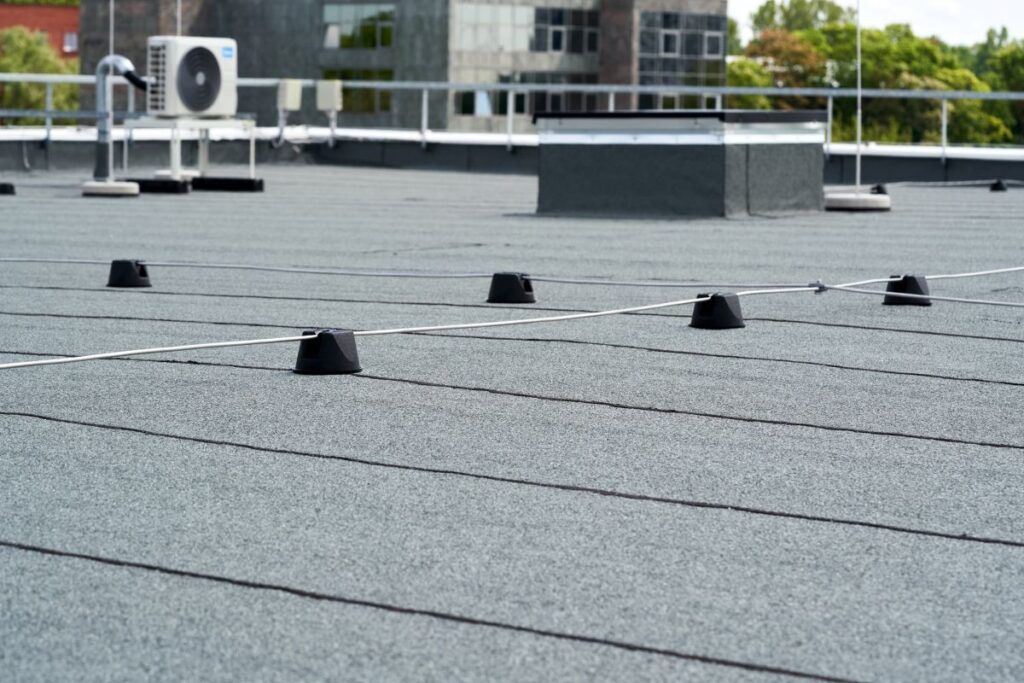

Commercial Roof Maintenance: Best Practices & Tips
A consistent commercial roof maintenance program is one of the highest-return investments a building owner can make, often doubling the service life of the roof and preventing the kind of water intrusion that shuts down operations and damages tenant property. Yet too many commercial property managers treat the roof as an out-of-sight, out-of-mind asset until a leak forces emergency repairs at three to five times the cost of preventive work. Building owners who follow a structured maintenance schedule, document every inspection, and partner with a qualified contractor consistently get more years out of their roof systems and avoid the surprise capital expenses that derail facility budgets.
- Inspection schedule: Plan for two professional inspections per year, plus additional checks after any major storm event.
- Documentation matters: Keep written records of every inspection, repair, and warranty action to protect your warranty and insurance coverage.
- Preventive over reactive: Proactive maintenance costs a fraction of emergency repairs and can extend roof life by 50 percent or more.
Why Is Commercial Roof Maintenance So Important?
Commercial roof maintenance is the single most effective way to protect a building’s largest exterior asset, and skipping it is the most common reason commercial roofs fail decades before their designed service life. Incorporating preventative maintenance and routine checks as essential components of a comprehensive maintenance strategy provides significant benefits, such as early detection of issues and long-term cost savings. A maintained roof keeps water out, supports warranty compliance, lowers insurance risk, and pays for itself many times over in deferred replacement costs.
How Does Maintenance Extend Roof Lifespan?
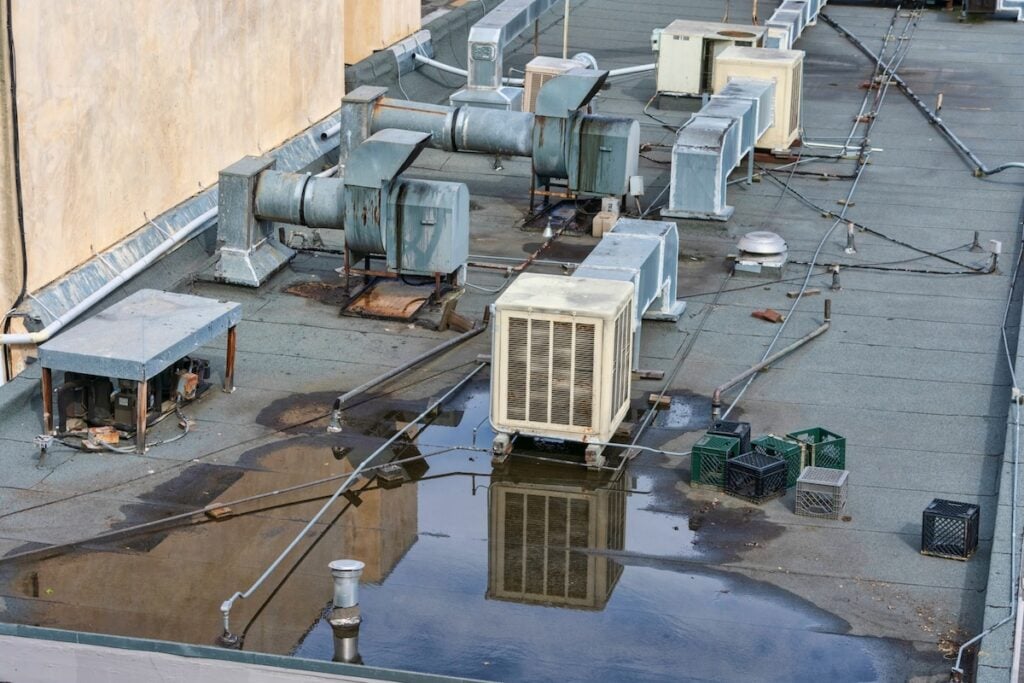
Regular maintenance extends commercial roof lifespan by catching small problems like seam separations, punctures, and ponding water before they grow into structural damage that shortens the entire system’s life. Most commercial roofing systems including TPO, EPDM, modified bitumen, and built-up roofs are designed for 20 to 30 years of service, but neglected roofs frequently fail at 12 to 15 years while well-maintained roofs often exceed 30. The math is straightforward: preventative maintenance typically costs around 5-9 cents per square foot, while neglecting maintenance can lead to costs of $10 per square foot for complete roof replacement. A $0.05 to $0.20 per square foot annual maintenance investment can defer a $7 to $20 per square foot replacement by a decade or more, helping you avoid expensive repairs.
- Designed lifespan: TPO and EPDM membranes last 20 to 30 years with proper maintenance, often half that without.
- Maintenance ROI: Every $1 spent on preventive care saves $4 to $5 in deferred replacement, emergency repairs, and helps avoid expensive repairs.
- Restoration option: A maintained roof often qualifies for a coating or restoration at year 15 to 20, deferring full replacement.
- Warranty preservation: Most manufacturer warranties require documented maintenance to remain valid.
What Are the Real Costs of Skipping Maintenance?
Skipping commercial roof maintenance compounds problems quickly because small issues never fix themselves on a flat or low-slope membrane roof. If left unchecked, even minor leaks or debris buildup can escalate into significant damage, requiring major repairs or even full roof replacement. Severe weather events, such as hurricanes, tornados, and thunderstorms, can cause significant damage to commercial roofs, potentially leading to extensive structural harm or complete roof failure if not addressed promptly. A pinhole leak ignored for one season can saturate insulation across hundreds of square feet, requiring costly tear-off and replacement of materials that were perfectly fine the year before. Water that reaches the building interior damages drywall, ceiling tiles, electrical systems, inventory, and tenant property, and triggers business interruption claims that often exceed the roof repair itself. Buildings with proactive maintenance programs report 30-50% lower roofing costs over time due to minor fixes preventing major structural damage.
- Wet insulation replacement: Saturated insulation costs $3 to $8 per square foot to remove and replace.
- Interior damage: Ceiling, lighting, and finishes typically cost $5,000 to $25,000 per leak event.
- Business interruption: Tenant downtime and operational disruption frequently cost more than the physical repair.
- Voided warranty: A single missed inspection can disqualify a $50,000-plus material warranty claim.
7 Best Practices for Commercial Roof Maintenance
The following seven best practices form the foundation of every successful commercial roof maintenance program. Developing a comprehensive roof maintenance plan and utilizing a maintenance checklist help ensure that all tasks are completed systematically and in accordance with industry standards. Maintaining detailed repair logs is also essential for supporting warranty claims, insurance processing, and long-term maintenance planning. Following these practices consistently keeps the roof watertight, the warranty intact, and the budget predictable year after year.
1. Schedule Two Professional Inspections Per Year
Two professional roof inspections per year, ideally one in spring and one in fall, is the baseline standard recommended by major industry authorities and is the single most important habit a property owner can build. Spring inspections identify damage from winter ice, snow loading, and freeze-thaw cycles, while fall inspections prepare the roof for the harshest weather of the year by clearing debris and addressing any issues from summer UV exposure and thermal cycling. Inspections should be performed by a qualified commercial roofing contractor who documents findings with photographs and a written report.
- Spring inspection: Catches winter damage including seam stress, flashing displacement, and ice dam aftermath.
- Fall inspection: Clears debris, verifies drainage, and prepares the system for winter loads.
- Written reports: Each inspection should include photos, condition notes, and prioritized repair recommendations.
- Qualified inspectors: Use licensed commercial roofing contractors familiar with your specific membrane type.
2. Inspect After Every Major Storm Event
Post-storm inspections should happen any time the building experiences high winds, hail larger than one inch, heavy ice loading, or unusually heavy rainfall. These events cause the punctures, lifted seams, displaced flashing, and impact damage that lead to the most expensive insurance claims. Documenting the roof’s condition shortly after the storm protects the building owner during insurance negotiations and ensures damage is repaired before the next weather event compounds the problem.
- Wind events: Sustained gusts above 60 mph can lift seams, displace coping, and dislodge edge metal.
- Hail damage: Stones over 1 inch can puncture single-ply membranes and crack modified bitumen surfaces.
- Heavy snow: Loads above 20 pounds per square foot can stress structural members and overload drainage.
- Insurance documentation: Date-stamped photos and written reports are critical for storm damage claims.
3. Keep Drains, Scuppers, and Gutters Clear
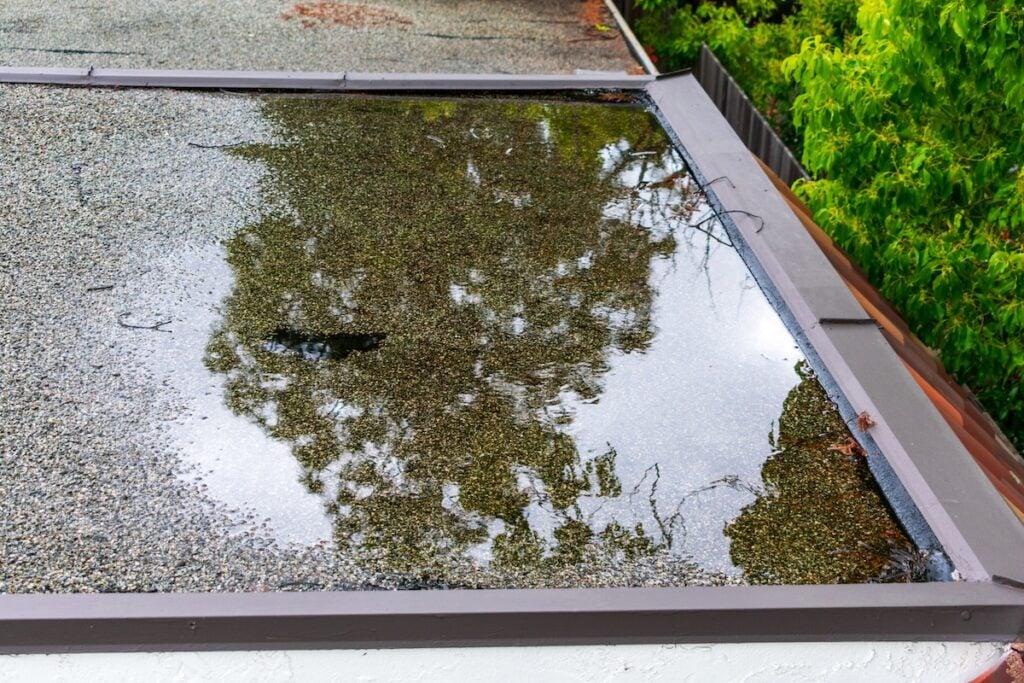
Clogged drains and scuppers are the leading cause of premature flat roof failure because trapped water adds enormous weight, accelerates membrane breakdown, and finds every weak point in the system. A two-inch ponding zone over 1,000 square feet adds nearly 5,000 pounds of weight and can saturate seams, fasteners, and flashings within hours. Drains should be cleared as part of every scheduled inspection and immediately after fall leaf drop or any storm that deposits debris.
- Clear quarterly: Drains, scuppers, and gutters should be cleared at minimum four times a year.
- After leaf drop: Schedule an extra clearing in late fall when most debris accumulates.
- Strainers and baskets: Verify drain strainers are intact and properly seated at every inspection.
- Ponding response: Any standing water 48 hours after rainfall warrants immediate professional review.
4. Address Small Repairs Immediately
Small membrane punctures, lifted seams, and damaged flashings should be repaired within days of discovery, not deferred to a future maintenance visit. Commercial roofing systems work as a continuous waterproof envelope, and even pinhole-sized openings allow moisture to migrate horizontally through insulation layers, often appearing inside the building far from the actual leak source. A $200 to $500 repair caught early prevents the $5,000 to $20,000 wet-insulation removal that follows weeks of unchecked moisture intrusion.
- Punctures: Patch within 7 days using manufacturer-approved materials to maintain warranty coverage.
- Seam separations: Heat-weld or chemically re-seal as soon as identified to prevent membrane lift.
- Flashing failures: Repair or replace immediately at parapets, curbs, penetrations, and edge details.
- Sealant degradation: Reseal pitch pans and exposed mastic joints every 3 to 5 years as part of routine care.
5. Manage Foot Traffic and Equipment Loads
Foot traffic from HVAC technicians, satellite installers, and other trades is one of the most common causes of unintentional roof damage on commercial buildings. Walk pads should be installed along regular service routes to protect the membrane, and any contractors working on the roof should be required to follow a documented rooftop access policy that includes shoe inspection, debris management, and check-in procedures. Heavy equipment additions like new HVAC units or solar panels should be reviewed by a structural engineer before installation.
- Walk pads: Install along service routes to HVAC, antennas, and other rooftop equipment.
- Access policy: Require all rooftop visitors to sign in and follow documented protection procedures.
- Load reviews: Engineer review required before adding solar panels, new HVAC, or other heavy equipment.
- Tool control: Prohibit dragging tools, pipes, or materials directly across the membrane surface.
6. Maintain Detailed Maintenance Records
Comprehensive maintenance documentation is required to keep most commercial roof warranties valid and is invaluable when filing insurance claims, planning capital expenses, or selling the building. Records should include inspection reports with photos, a log of all repairs and the contractor who performed them, warranty paperwork, and copies of any storm-related correspondence with insurers. Most modern roofing contractors provide a digital portal where this information is stored and accessible to the building owner at any time.
- Inspection reports: Date, photos, findings, and recommended actions for every visit.
- Repair log: What was repaired, who did the work, what materials were used, and what it cost.
- Warranty documents: Original installation warranty, any registered transfers, and required maintenance evidence.
- Storm records: Date-stamped photos and inspection reports following every significant weather event.
7. Plan for Restoration Before Replacement
Most well-maintained commercial roofs are candidates for restoration coatings at the 15-to-20-year mark, which can extend usable life by another 10 to 15 years at roughly 30 to 50 percent of full replacement cost. Restoration only works on roofs that have been properly maintained, which is another reason consistent care pays for itself many times over. Building owners should request a restoration vs. replacement evaluation any time their roof reaches the second half of its expected lifespan.
According to the National Roofing Contractors Association, once a roof system is installed, nothing is more critical to its long-term performance than establishing a program of regular inspections and proper maintenance, and a proactive maintenance program identifies problems early when they can be corrected before becoming catastrophes.
- Coating systems: Silicone, acrylic, and polyurethane coatings can add 10 to 20 years of service life.
- Cost advantage: Restoration typically costs 30 to 50 percent of full replacement.
- Tax treatment: Coatings often qualify as a maintenance expense rather than a capital improvement.
- Energy benefit: Reflective white coatings can cut summer cooling costs by 10 to 20 percent.
What Should a Commercial Roof Inspection Actually Cover?
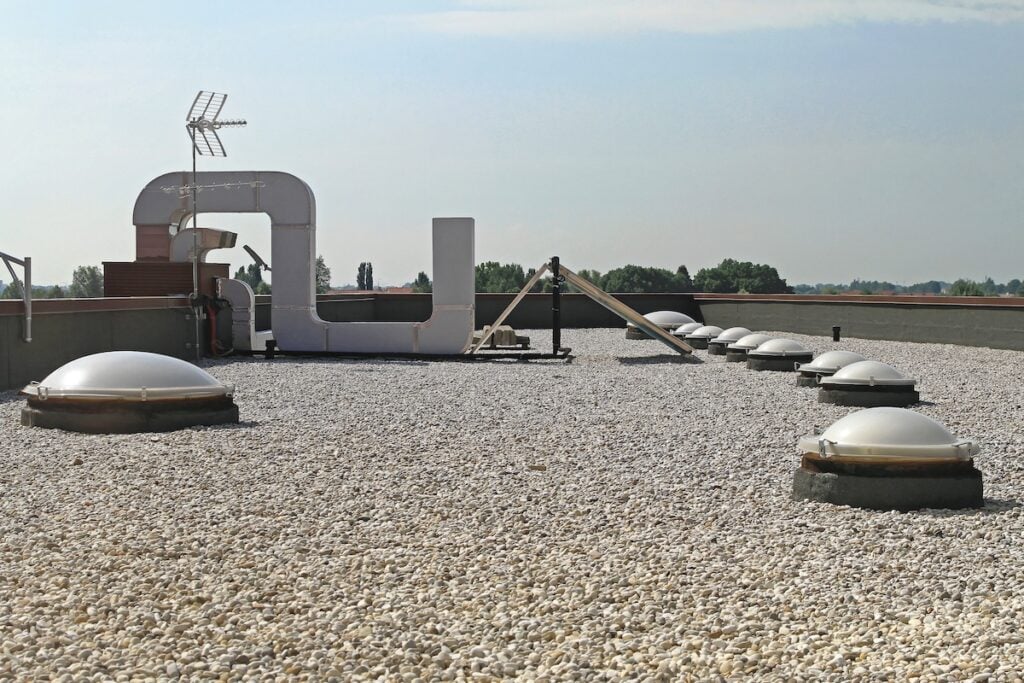
A thorough commercial roof inspection covers far more than just walking the membrane and looking for obvious damage. It systematically examines the field membrane, every penetration, all flashings and edge details, the drainage system, and the rooftop equipment, with each finding documented for the property owner. Inspecting the entire roofing system is crucial, taking into account the specific roofing material and ensuring that all roof surfaces are clean and free of debris to prevent damage and maintain proper drainage. Special attention should be given to penetration points such as HVAC curbs, skylights, vents, and pipes, as most leaks originate in these areas.
What Are the Critical Inspection Points?
The critical inspection points on any commercial roof include the field membrane, all penetrations and curbs, perimeter flashings and edge metal, drains and scuppers, expansion joints, and any rooftop equipment that touches the membrane. Each of these areas fails differently and at different rates, so a comprehensive inspection methodically works through every category. Skipping even one category, such as ignoring expansion joints because they are hidden, is exactly how slow leaks become major losses.
- Field membrane: Examine the roof membrane for integrity issues such as cracks, blisters, punctures, granule loss, and surface aging. Inspect flashings around HVAC units and vents to ensure they are intact and watertight.
- Penetrations: Inspect every pipe, vent, and curb for sealant integrity and flashing condition.
- Perimeter and edge: Verify coping, edge metal, and gravel stop are secure and watertight.
- Drainage: Confirm drains, scuppers, and gutters flow freely and have no ponding zones.
What Documentation Should the Inspector Provide?
Every commercial roof inspection should produce a written report with date-stamped photographs, a categorized list of findings, recommended repairs prioritized by urgency, and a cost estimate for any work needed. The report becomes part of the building’s permanent maintenance record and supports warranty claims, insurance documentation, and capital planning. Reports without photos, prioritization, or specific recommendations are not adequate inspection documentation.
- Date-stamped photos: Visual evidence of every finding for warranty and insurance purposes.
- Prioritized findings: Issues ranked as immediate, short-term, and long-term action items.
- Cost estimates: Specific dollar ranges for each recommended repair.
- Comparison data: Reference to prior inspections to show condition trends over time.
Frequently Asked Questions
How Often Should a Commercial Roof Be Inspected?
Commercial roofs should be professionally inspected at least twice per year, typically in spring and fall, plus after any major storm event such as high winds, hail, or heavy snow. Older roofs, roofs with heavy rooftop equipment, or roofs in severe climates may benefit from quarterly inspections. The cost of an annual inspection program is a fraction of the cost of one preventable leak.
How Much Does Commercial Roof Maintenance Cost?
A typical commercial roof maintenance contract costs $0.05 to $0.20 per square foot annually, which works out to roughly $1,000 to $4,000 per year for a 20,000 square foot building. Costs vary based on roof size, membrane type, accessibility, number of penetrations, and whether the contract includes minor repairs. Compared to the $7 to $20 per square foot cost of full replacement, maintenance is one of the highest-ROI building expenses available.
Can Commercial Roof Repairs Be Done in Winter?
Most commercial roof repairs can be completed in winter, though some adhesives, sealants, and welded seams require minimum temperatures or specialized cold-weather products to bond properly. Emergency leak repairs are routine in winter, while large-scale work like full re-roofs is generally scheduled for milder months. A licensed commercial contractor will know which repair methods work in your climate and at what temperatures.
Does Maintenance Affect My Roof Warranty?
Yes, almost every commercial roof manufacturer warranty requires documented maintenance to remain valid. Skipping inspections, allowing unauthorized contractors to make repairs, or failing to address known issues can void coverage even on relatively new roofs. Always confirm the specific maintenance requirements of your warranty and keep copies of every inspection and repair record.
What Is the Difference Between Maintenance and Repair?
Maintenance is the proactive, scheduled work that keeps the roof in good condition, including inspections, drain clearing, sealant refresh, and minor patching. Repair is the reactive work needed when something fails, such as patching a leak, replacing damaged flashing, or removing wet insulation. A strong maintenance program dramatically reduces the frequency and cost of repairs.
Should I Use a Single Contractor for All Maintenance Work?
Using a single qualified commercial roofing contractor for all maintenance and repair work is strongly recommended because it preserves continuity in the inspection record, simplifies warranty compliance, and ensures consistent quality. The contractor learns the specific quirks of your roof over time and can spot trends that a rotating mix of vendors would miss. Choose a licensed, insured contractor with documented commercial experience.
Why 5 Star Roofing and Contracting Is the Right Partner for Your Commercial Roof
A commercial roof is a major capital asset, and protecting it requires a maintenance partner who shows up on schedule, documents every visit, and communicates clearly with property owners and facility managers. 5 Star Roofing and Contracting brings that exact discipline to every commercial maintenance agreement, backed by IKO ShieldPRO Certified Contractor status, HomeAdvisor Top Rated recognition, full licensing, and 24/7 emergency repair availability.
Our team builds custom maintenance schedules around your roof type, age, and rooftop equipment, provides written reports with photographs after every visit, and proactively flags warranty and restoration opportunities before they become emergencies. Reach out to 5 Star Roofing and Contracting today for a free, no-obligation commercial roof inspection and a custom maintenance plan that protects your building, your tenants, and your bottom line.