TPO Commercial Roofing: 5 Benefits for Your Building
Your commercial roof protects your inventory, equipment, employees, and customers, so choosing the right system is one of the most important decisions a property owner makes. Over the past few decades, TPO commercial roofing has become a go-to option for commercial and industrial buildings thanks to its blend of durability, efficiency, and value. If you are planning a replacement or new build, understanding this membrane can help you keep your operations running smoothly for years to come.
In this guide, we cover:
- Why your membrane choice affects long-term costs
- Five key benefits of TPO roofing
- How TPO performs in a northern climate
- How TPO compares to EPDM and PVC
- Answers to common property owner questions
Why Your Roofing Membrane Choice Affects Your Bottom Line
A commercial roof is a major investment, and the membrane you select shapes everything from monthly utility bills to how often you deal with leaks. TPO (thermoplastic polyolefin) is a single ply roofing membrane made by polymerizing ethylene-propylene rubber and polypropylene together. Many products include a polyester scrim added during the manufacturing process, creating a reinforced TPO membrane that is rolled out over the roof deck and sealed into one continuous roof surface. When it is installed correctly and maintained well, a TPO roof typically lasts 15 to 30 years, making it a smart long-term choice for many buildings. For business owners in Fargo, ND and surrounding areas, the right system delivers clear advantages:
- Predictable budgeting: Lower maintenance costs and fewer surprise repairs and helps you plan capital expenses with confidence.
- Lower operating costs: Highly reflective, well-insulated roofs can help reduce energy demand, which supports a healthier bottom line.
- Fewer disruptions: A watertight roof prevents water infiltration and costly repairs that interrupt daily operations, damaging stock, or inconveniencing tenants.
- Stronger property value: A modern, well-maintained roofing system is an asset when you lease, refinance, or sell a building.
Choosing a membrane is not just a construction decision; it is a business decision. Understanding what TPO brings to the table helps you weigh it against your goals and budget.
5 Benefits of TPO Commercial Roofing
TPO systems continue to grow in popularity across commercial and industrial buildings and multi-family properties. Here are five reasons so many owners choose a TPO roofing system over other commercial roofing materials.
1. Energy-Efficient Reflective Surface
Most TPO roofing membranes are white or light-colored, which allows them to reflect a large portion of the sun’s UV rays instead of absorbing them. These highly reflective surfaces earn strong solar reflectance and Solar Reflectance Index (SRI) ratings, making TPO a highly efficient choice. This cool roof effect reduces heat transfer into the building during warm months, easing the load on air conditioning systems.
- Helps maintain more comfortable interior temperatures in summer
- Can reduce cooling costs for warehouses, offices, and retail spaces
- Lighter rooftops may help extend the life of rooftop equipment
For buildings with large, open roof areas, that reflectivity can add up to meaningful savings over the life of the roof.
2. Heat-Welded Seams for Superior Leak Protection
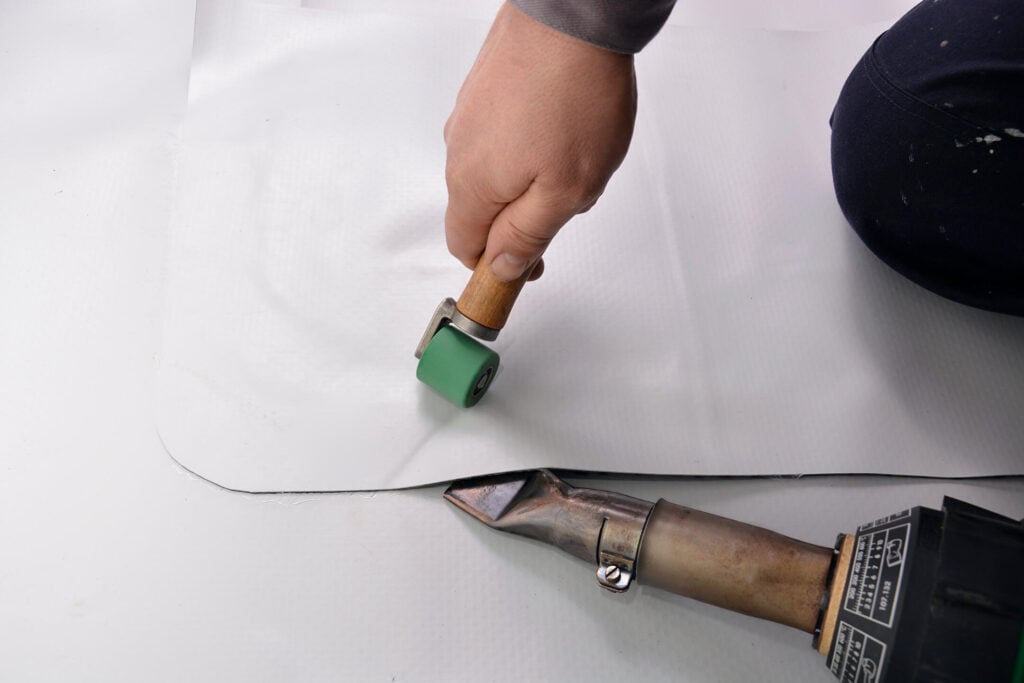
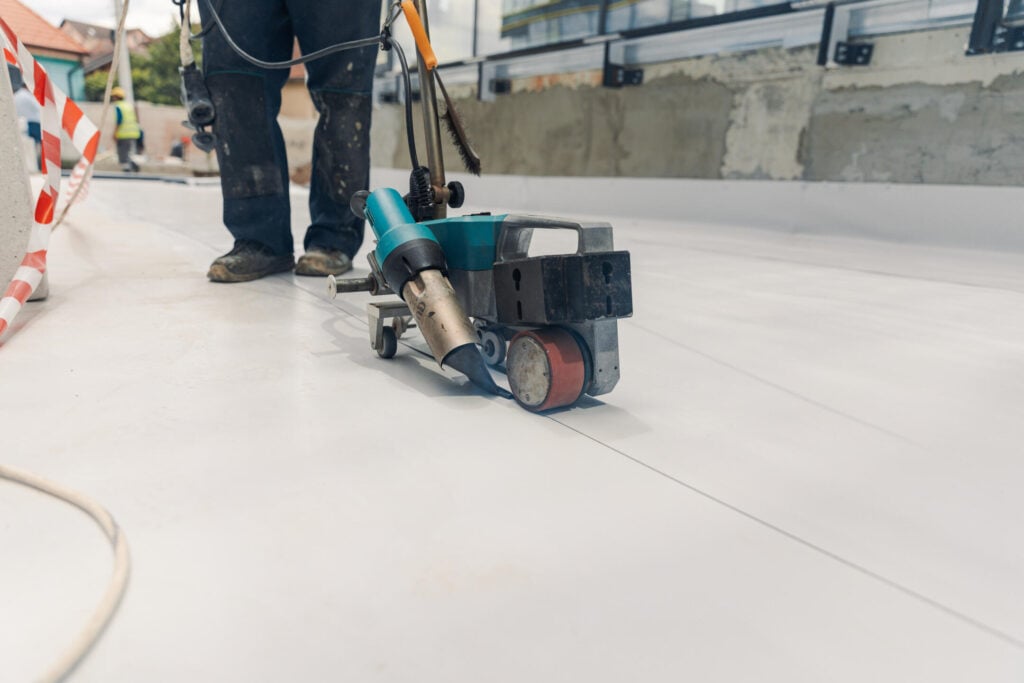
Seams are often the weakest point on a flat roof. During the installation process, crews use hot-air welding equipment to fuse overlapping sheets together, creating a single, continuous membrane. These welded seams are highly durable and offer excellent resistance to water infiltration, which is critical on low-slope roofs where water moves slowly.
- Welded seams create one continuous waterproof layer
- Fewer vulnerable joints than many multi-piece systems
- Seams can be tested and inspected during installation
- Factory applied tapes and prefabricated accessories help seal corners and penetrations
Strong seams mean fewer weak spots, which is exactly what a flat roof needs to stay watertight.
3. Cost-Effective Installation and Ownership
TPO is typically more affordable than many premium single ply options while still offering solid performance. Because it comes in wide rolls and is easy to install, crews can cover large areas efficiently, which helps control labor costs per square foot. Over time, its energy savings and relatively low maintenance needs add even more value.
- Competitive material and installation pricing
- Faster installation on large, open roof areas
- Potential long-term energy savings
This combination of upfront value and ongoing savings is a big reason TPO appeals to budget-conscious owners.
4. Lightweight Membrane With Versatile Installation Methods
TPO is lightweight, so it adds minimal load to your roof structure. Common installation methods include fully adhered systems, mechanically attached systems that use screws and plates, induction-welded systems that use electromagnetic induction to bond the membrane to special plates, and ballasted systems. TPO can be installed directly over a range of approved substrates, including plywood decks or polyiso insulation topped with a cover board.
- Fastening patterns are designed to meet wind uplift requirements
- Proper attachment improves wind uplift performance in exposed areas
- Recovery options may be possible when the existing roof is sound
Your contractor will choose the attachment method that best fits your deck, insulation, and wind exposure.
5. Durability With Low Maintenance Needs
TPO resists tears, punctures, biological growth, and many common chemicals, and it stands up well to harsh rooftop conditions. It comes in 45, 60, and 80 mil thicknesses, and thicker membranes generally last longer, especially where HVAC technicians create regular foot traffic. Routine care, such as clearing debris, keeping drains open, and scheduling periodic inspections, goes a long way toward maximizing its service life.
- Holds up well against UV rays and weathering
- Does not require routine recoating with silicone coatings
- Small tears can be repaired with heat-welded patches using specialized tools
Together, these benefits make TPO a versatile, budget-friendly option for many commercial roofing applications. Still, every building is different, so it is worth looking at how TPO performs in your specific climate.
How TPO Performs in a Northern Climate
Upper Midwest winters bring heavy snow, freeze-thaw cycles, and long stretches of subzero temperatures. Property owners in Fargo, ND and surrounding areas should consider these conditions carefully when evaluating any flat roofing system.
Cold-Weather Flexibility
TPO remains flexible in cold temperatures, which helps it handle extreme weather and the expansion and contraction that come with seasonal swings. TPO roofing installation, however, is best scheduled during suitable weather, since adhesives and welding require the right conditions to bond properly.
Snow Load and Drainage
Flat roofs must shed meltwater efficiently to prevent ponding, ice buildup, and added structural stress. A quality TPO installation includes proper slope, well-placed drains, and attention to areas around rooftop units where water and snow tend to collect.
Insulation Makes a Difference
In a cold climate, the insulation beneath your membrane matters just as much as the membrane itself. TPO roof assemblies should also comply with local energy codes for insulation and R-value. Common choices include polyisocyanurate (polyiso insulation), expanded polystyrene (EPS), and extruded polystyrene (XPS), each offering a different balance of cost and thermal performance. Your contractor can recommend the right type and thickness to keep heat inside during winter.
With the right design and installation, TPO can perform well even in demanding northern conditions. Partnering with a contractor who understands local weather is the key to getting the most from your investment.
TPO vs. EPDM vs. PVC: Comparing Flat Roofing Options
TPO is not the only single ply roofing option on the market. EPDM and PVC membrane systems are two other popular choices, and each has strengths worth understanding before you decide.
| Feature | TPO | EPDM | PVC |
| Material | Thermoplastic polyolefin | Synthetic rubber | Polyvinyl chloride |
| Typical color | White or light | Black (white available) | White or light |
| Seam method | Heat-welded | Adhesive or tape | Heat-welded |
| Energy efficiency | High reflectivity | Absorbs more heat | High reflectivity |
| Typical lifespan | 15 to 30 years | Up to 30 years or longer | About 20 years or more |
| Relative cost | Moderate | Lower to moderate | Higher |
| Best fit | Cost-conscious, energy-focused buildings | Budget projects, cold-climate durability | Restaurants and buildings exposed to oils or chemicals |
For many property owners, TPO strikes a strong balance between upfront cost, energy performance, and seam strength. EPDM remains a proven, budget-friendly option, while PVC is often chosen where grease or chemical exposure is a concern, such as restaurant rooftops. Both TPO and PVC are thermoplastic membranes, and many TPO manufacturers market their products as 100% recyclable at the end of their lifespan.
When comparing roofing materials for different roofing applications, ask for membranes that meet ASTM standards and review warranty terms closely, since they can range from about five to thirty years. IKO’s InnoviTPO line, for example, offers a Diamond Shield Limited Warranty on complete IKO systems installed by approved applicators, with terms up to 30 years on 80-mil membranes. Some warranties exclude hail without added coverage, so read the fine print. A professional evaluation of your building, budget, and usage will help determine which membrane is truly the best fit.
Frequently Asked Questions About TPO Commercial Roofing
Property owners often have similar questions when they first explore TPO. Here are straightforward answers to some of the most common ones.
How long does a TPO commercial roof last?
With quality installation and routine maintenance, a TPO roof commonly lasts between 15 and 30 years. Climate, sun exposure, installation quality, and upkeep all influence how long your specific roof will perform.
How much does TPO roofing cost?
Costs depend on roof size in sq ft, membrane thickness, insulation, tear-off needs, and roof complexity. Because every building is different, an on-site inspection and written estimate are the best ways to get accurate pricing.
Can TPO be installed over an existing roof?
Sometimes. If your current roof is structurally sound and in good condition, your contractor may install TPO over it with a recovery board. If there is moisture damage or deterioration, a complete tear off is usually the better choice.
Does TPO work in cold climates?
Yes. TPO stays flexible in cold temperatures and handles seasonal movement well. Proper insulation, drainage, and installation timing are essential to strong performance in northern climates.
How should I maintain a TPO roof?
Keep the surface clear of debris, make sure drains and gutters stay open, and schedule professional inspections at least once or twice a year and after major storms. Repairing small tears promptly helps prevent water damage.
Every commercial building has unique needs, so it is always wise to ask a qualified roofer about your specific situation. A thorough inspection can answer questions that general guidelines cannot.
Protect Your Building With 5 Star Roofing and Contracting
The right roofing system safeguards your property, controls operating costs, and keeps your business running without interruption. TPO commercial roofing offers energy efficiency, strong welded seams, and lasting value, making it an excellent fit for many flat and low-slope buildings. 5 Star Roofing and Contracting helps business owners throughout Fargo, ND and surrounding areas choose, install, and maintain commercial roofing systems built to provide protection in our demanding climate, on roofing projects of every size. To discuss your building’s needs and schedule a free consultation, contact us today.