


7 Signs of Hail Damage on Roof: A Homeowner’s Guide
Knowing the signs of hail damage on roof shingles can save you thousands of dollars and protect your home from leaks that could otherwise go unnoticed for months. Hail can look harmless from the ground after a storm, but even small stones moving at speed can crack, bruise, or strip granules from your shingles in ways that lead to bigger problems later. Catching the damage early gets you in line for insurance coverage, faster repairs, and a roof that keeps doing its job for years to come.
- Why it matters: Hail damage often hides in plain sight and gets worse over time if it’s not addressed.
- What to look for: Dents, bruises, missing granules, cracked shingles, and damaged flashing are the main warning signs.
- What to do: Document the damage, file your insurance claim quickly, and call a trusted roofing contractor.
Why Does Hail Damage Matter So Much for Your Roof?
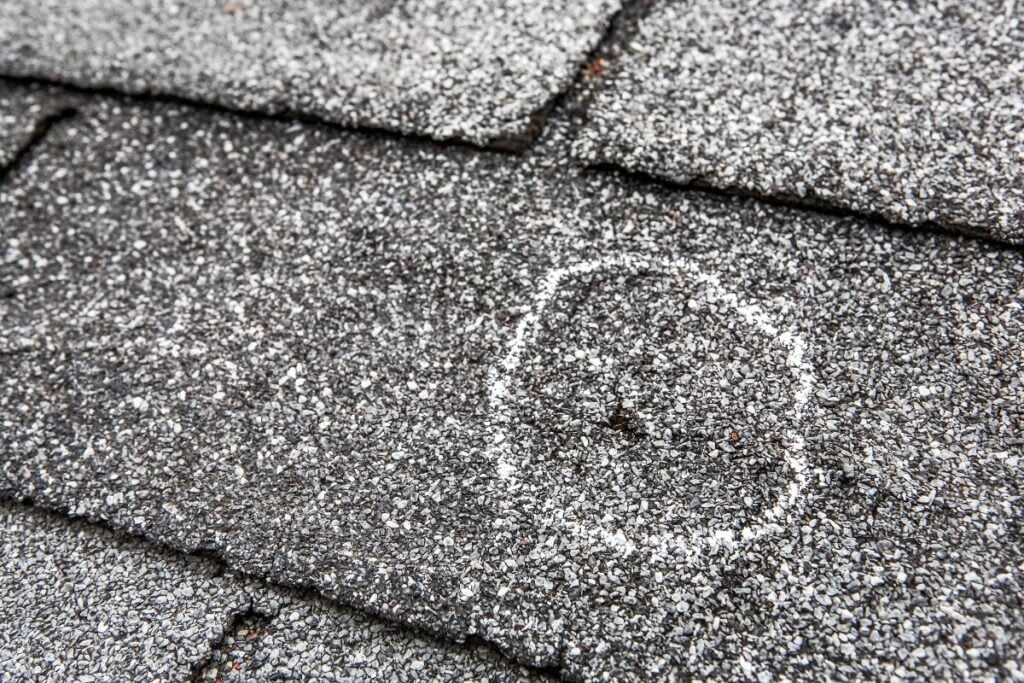
Hail damage matters because it weakens the protective layer of your roof in ways you often can’t see from the ground. Even when the shingles still look mostly intact, the damage underneath can shorten your roof’s life by years and let water in long before you’d expect a leak.
How Common Is Hail Damage in the United States?
Hail is one of the most common and costly weather events in the country, and the damage to homes adds up fast. Storms drop hail across millions of homes every year, and even short, mild storms can leave behind serious roof damage. If you live in the Midwest, Great Plains, or the Mountain West, you’re especially likely to deal with hail damage at some point during the life of your roof. That’s why knowing what to look for is part of being a smart homeowner.
According to the Insurance Information Institute, NOAA’s National Weather Service Storm Prediction Center recorded 5,432 major hail events in the United States in 2025, with Texas and Kansas reporting the largest number of events, which shows how widespread hail damage to homes really is.
- Thousands of storms each year: Hail events happen across most of the country every year.
- Hail Alley: The Midwest and Great Plains see the most hail events annually.
- Spring and summer: Most hail storms happen between April and September.
- Any size matters: Even hail under one inch can damage older roofs.
What Kind of Damage Does Hail Actually Cause?
Hail causes damage by hitting the roof at high speeds, which can crack the shingles, knock off the protective granules on top, dent metal vents and flashing, and break the seal that holds shingles together. Some of the damage shows up right away, like a missing shingle, but a lot of it is subtle and takes a closer look to spot. Damaged shingles let water in, lose their fire and weather protection, and tend to fail much sooner than they should.
- Cracks and breaks: Direct hits can crack or split shingles.
- Granule loss: Hail knocks off the protective surface granules.
- Broken seals: Impacts can break the bond between shingles.
- Damaged metal: Vents, flashing, and gutters often dent visibly.
7 Signs of Hail Damage on Roof Shingles
These are the seven biggest warning signs that hail has affected your roof. Even one of them is worth a closer look, and several together usually means it’s time to bring in a roofing contractor.
1. Dents or Bruises on Asphalt Shingles
Dents or bruises on asphalt shingles are one of the most reliable signs of hail damage, even if they’re hard to spot from the ground. A hail bruise feels soft to the touch when you press on it, almost like pressing on a fresh bruise on your skin. The impact knocks granules loose and weakens the asphalt underneath, even when there’s no visible crack. Bruises usually show up as round, dark spots scattered randomly across the roof, and the pattern of damage tells you a lot about where the storm hit hardest.
- Soft to the touch: Pressing on a hail bruise feels slightly spongy.
- Round and random: Damage is usually scattered, not in straight lines.
- Dark spots: Bruises often look darker than surrounding shingles.
- Granule loss nearby: Bruises typically come with granule loss in the same spot.
2. Granules in Gutters and Downspouts
A heavy buildup of shingle granules in your gutters or at the bottom of your downspouts is one of the easiest signs to spot from the ground. Granules are the small, sandy particles that cover the surface of asphalt shingles to protect them from sun and weather. After a hail storm, you’ll often see piles of granules washed into the gutters that look like coarse black sand. Some granule loss is normal over time, but a sudden, large amount after a storm is a strong sign that the shingles took impact damage.
- Coarse, black sand: Granules look like fine, dark gravel in the gutters.
- Splash blocks: Check the splash blocks under downspouts for granule piles.
- After-storm change: A noticeable increase right after a storm is the telltale sign.
- Worn shingles: Heavy granule loss makes shingles age much faster.
3. Cracked, Split, or Missing Shingles
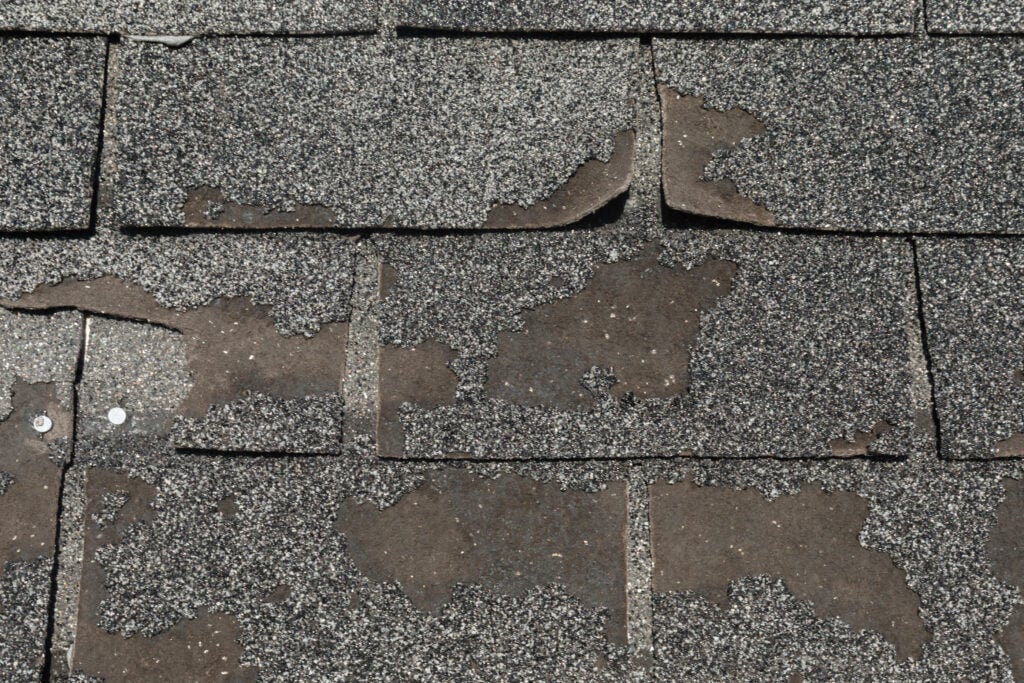
Cracked or split shingles are an obvious sign of hail damage, especially when the damage shows up randomly across the roof rather than in one spot. Large hail can crack older or brittle shingles in half, and bigger stones can knock entire shingles loose. Missing shingles after a storm need immediate attention, because the underlayment is exposed to water and can be damaged within hours of the next rainfall. A roofer can quickly tell whether cracks are from hail, from age, or from another cause.
- Random cracks: Hail cracks show up randomly across the roof.
- Split shingles: Large hail can split shingles in half.
- Missing pieces: Any missing shingles after a storm need urgent attention.
- Older shingles crack first: Older or brittle shingles are most vulnerable.
4. Damage to Metal Vents, Flashing, and Gutters
Hail often leaves clear, visible damage on metal parts of the roof, which is one of the easiest ways to confirm a storm caused damage. Look for dents on roof vents, satellite dishes, gutters, downspouts, and flashing around chimneys and skylights. If you can see dents in the metal, the hail was almost certainly big enough to damage the shingles too. This is one of the first places insurance adjusters look during a hail damage inspection.
- Dented vents: Roof vents often show clear, round dents from hail.
- Bent gutters: Gutters and downspouts can dent or warp visibly.
- Damaged flashing: Dented or displaced flashing around chimneys and skylights.
- Confirms the storm: Dented metal confirms hail size and impact severity.
5. Damaged Skylights or Window Screens
Damage to skylights, window screens, or any other glass and screened surface near the roof is another clear sign that hail was strong enough to harm the shingles. Skylights might show cracks, chips, or starring patterns in the glass. Window screens often have small punctures or tears, and outdoor window sills can show pitting and divots. If you see this kind of damage anywhere outside, a roof inspection is a smart next step.
- Cracked skylights: Hail can crack or chip skylight glass.
- Torn screens: Punctures or tears in window screens.
- Pitted sills: Divots in painted window sills or trim.
- Damaged outdoor items: Patio furniture, grills, and AC fins often show dents too.
6. Soft Spots or Bruises on Wood Shingles
Wood shingle roofs show hail damage differently than asphalt. Hits on wood shingles often look like fresh splits in the grain, dark impact marks, or sharp angled breaks. Like asphalt, wood shingles can also have soft spots that feel different when pressed, indicating the wood fibers underneath have been damaged. Wood shingle damage is sometimes harder for homeowners to spot, so a professional inspection is especially helpful with this roof type.
- Fresh splits: New cracks in the wood grain.
- Dark impact marks: Bruised areas that look freshly damaged.
- Sharp breaks: Angled fractures across the shingle.
- Soft texture: Damaged wood feels softer than undamaged areas.
7. Interior Leaks or Water Spots
Inside damage shows up days, weeks, or even months after a hail storm, depending on how bad the damage was and how much rain you’ve had since. Water spots on ceilings, damp insulation in the attic, or musty smells in upper rooms all point to a leak somewhere above. By the time interior damage shows up, the hail damage outside has usually been letting water in for a while. Don’t wait for interior signs to call a contractor if you suspect hail damage.
- Ceiling spots: Yellow or brown stains on top-floor ceilings.
- Wet insulation: Damp or matted attic insulation.
- Musty smell: Damp odors in upper-floor rooms or closets.
- Late-arrival damage: Interior signs can show up weeks after the storm.
What Should You Do If You Spot Hail Damage on Your Roof?
If you spot any of these signs, the next steps matter. Acting quickly protects your home, your warranty, and your shot at full insurance coverage.
How Do You Document the Damage?
Documentation starts from the ground with date-stamped photos of every visible sign of damage, including dents on gutters, broken skylights, granules in the gutters, and any interior water spots. Avoid climbing on the roof yourself, since hail-damaged roofs are slippery and unsafe. Keep weather records that show when the storm happened, since insurance adjusters often check storm dates. A professional roof inspection adds a written report with detailed photos that strengthens any insurance claim.
- Date-stamped photos: Take photos of everything visible from the ground.
- Keep weather records: Save news articles or NOAA reports about the storm.
- Skip the ladder: Don’t climb on the roof yourself after a storm.
- Pro report: Get a professional inspection with photos for your records.
How Do You File an Insurance Claim?
Filing an insurance claim starts with calling your insurance company to report the damage and request an adjuster visit. Most policies have a time limit, usually one to two years from the date of the storm, but it’s best to file quickly while the damage is fresh. Have your photos, weather records, and a written inspection report from a licensed roofer ready when you call. A good roofing contractor can also meet with the adjuster to walk the roof together and make sure no damage gets missed.
- Call quickly: Most policies have a 1 to 2 year filing window.
- Have records ready: Photos, weather data, and a contractor’s report.
- Adjuster visit: The insurance company sends an adjuster to inspect.
- Contractor at the meeting: Having your roofer present helps catch all damage.
When Should You Repair vs. Replace?
Some hail damage can be fixed with a few replacement shingles, while heavier damage usually means full replacement. Light damage to a small area on a newer roof often gets repaired, while widespread damage on an older roof almost always justifies a full replacement. Your insurance adjuster and your contractor will help you decide which option makes the most sense for your specific situation. Make sure any repairs match the existing shingles in color and style, or the patches will be obvious.
- Light damage, newer roof: Targeted shingle replacement is usually enough.
- Heavy damage, any roof: Full replacement is often the right call.
- Old roof, any damage: Replacement is usually smarter than repair.
- Match the material: Repairs should match the existing shingles.
Frequently Asked Questions
How Big Does Hail Have to Be to Damage a Roof?
Hail one inch in diameter or larger is generally enough to damage an asphalt shingle roof, especially if the shingles are older. Hail under one inch can still cause minor damage to aging roofs or roofs in poor condition, while hail over two inches usually causes obvious damage that’s easy to spot.
How Long Do I Have to File a Hail Damage Claim?
Most insurance policies require hail damage claims to be filed within one to two years of the storm, though the window varies by state and insurance company. The sooner you file, the easier it is to prove the damage came from a specific storm. Check with your insurance company for the exact deadline on your policy.
Will a Hail Damage Claim Raise My Insurance Premium?
Hail damage is typically considered an act of nature, so a single claim doesn’t usually raise your individual premium directly. However, repeated claims or living in a hail-prone area can lead to higher premiums or stricter coverage requirements over time. Many homeowners still see overall rate increases in their area after major hail events.
Can I Inspect Hail Damage Myself?
You can spot many signs of hail damage from the ground or from a window, but actually walking the roof is dangerous after a storm. Hail-damaged surfaces can be slippery, and falls from roofs send thousands of homeowners to ERs every year. A professional inspection is safer and far more thorough.
What If My Roof Looks Fine After a Storm?
A roof that looks fine from the ground can still have hidden hail damage, especially in the form of bruises and granule loss. If your area had hail one inch or larger, a free inspection is worth scheduling even if you don’t see obvious damage. Catching damage early is the best way to protect your home and your insurance options.
How Much Does Hail Damage Repair Cost?
Light hail damage repairs typically cost $400 to $1,500 for targeted shingle replacement and sealant work. Larger repairs that involve full sections or significant flashing work run $2,000 to $5,000. If insurance approves a full replacement, your out-of-pocket cost is usually just your deductible.
Why 5 Star Roofing and Contracting Is the Right Choice for Hail Damage Inspections and Repair
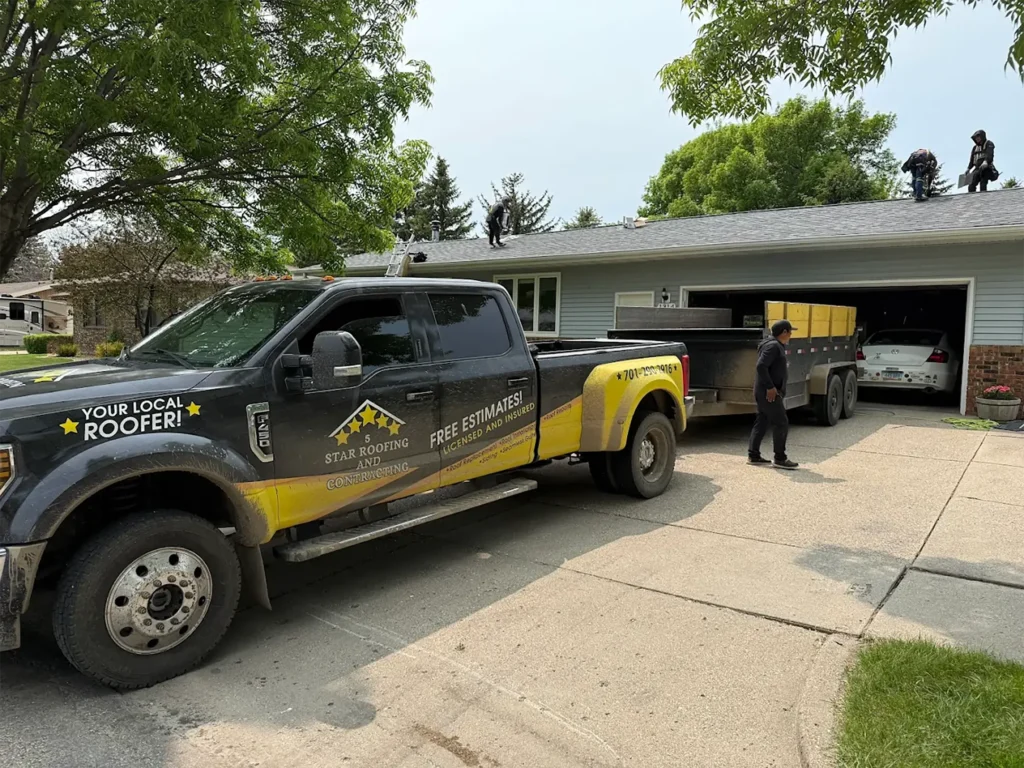
When hail hits, the contractor you call makes a real difference in how thorough the inspection is, how clearly the damage is documented, and how smoothly your insurance claim goes. 5 Star Roofing and Contracting brings the experience and reliability homeowners need after a storm, including IKO ShieldPRO Certified Contractor status, HomeAdvisor Top Rated recognition, full licensing, and 24/7 emergency repair availability when leaks can’t wait. Our team meets with insurance adjusters, documents every sign of damage with photos, and walks you through the entire claim process in plain language. Reach out to 5 Star Roofing and Contracting today for a free, no-pressure hail damage inspection and honest advice on the right next step for your roof.

